Hello there, aspiring website owner! Are you ready to dive into the exciting world of website creation? If so, you've come to the right place. Building a stunning website might seem like a daunting task, but with WordPress, it's an incredibly achievable goal for anyone, regardless of technical background. This guide is designed to walk you through every step of setting up your very own WordPress website, making the process straightforward and enjoyable. Tiktok Ideas
WordPress is an amazing platform that powers over 43% of all websites on the internet, from personal blogs to Fortune 500 companies. Its popularity stems from its incredible flexibility, vast array of customization options, and a supportive global community. Whether you're dreaming of a personal blog, a business website, a portfolio, or even an online store, WordPress offers the tools you need to bring your vision to life without writing a single line of code. Snapchat Trends
In this comprehensive tutorial, we'll cover everything from getting your website online to making it look fantastic and perform optimally. We'll demystify the technical jargon and provide clear, actionable steps that empower you to take control of your online presence. By the time you finish this guide, you'll have a fully functional WordPress website that you can be proud of, ready to share with the world. Email Marketing
Table of Contents:
Welcome to WordPress: Your Website's Foundation
Choosing Your Home on the Web: Domain Name and Hosting
Bringing WordPress to Life: Installation
Your Mission Control: Navigating the WordPress Dashboard
Dressing Up Your Site: Selecting and Installing a Theme
Speeding Things Up: Website Performance Improvements
Fortifying Your Site: Security Best Practices
Keeping Things Running Smoothly: Backups and Maintenance
Ready for the World: Going Live and Beyond
1. Welcome to WordPress: Your Website's Foundation
Welcome aboard to the journey of building your website with WordPress! This incredible Content Management System, or CMS, allows you to create, manage, and publish website content with ease, all without needing to know complex coding languages like HTML, CSS, or JavaScript. Think of it as powerful software that provides an intuitive interface for everything from writing articles to designing your site visually. Tiktok Video Growth Guide Go Viral
The real beauty of WordPress lies in its self-hosted version, WordPress.org, which is what we'll be focusing on in this guide. This gives you complete control over your website, offering full customization freedom, access to an enormous library of themes and plugins, and total ownership of your site and data. It's the go-to choice for anyone looking to build a serious and scalable online presence. Telegram Marketing For Business Growth
Throughout this guide, we'll break down the entire process into simple, manageable steps. We understand that starting something new can feel a bit overwhelming, but rest assured, we're here to guide you. Our goal is to equip you with the knowledge and confidence to build a professional, functional, and visually appealing website that perfectly suits your needs.
Follower Engagement
2. Choosing Your Home on the Web: Domain Name and Hosting
Before you can build your amazing website, you need two fundamental elements: a domain name and web hosting. Your domain name is essentially your website's address on the internet, like “www.yourwebsite.com”. It's how people will find you online, so choosing a memorable and relevant name is a great first step. The Complete Beginners Guide To Snapchat In 2026
Web hosting, on the other hand, is where your website “lives”. It's the online server space that stores all your website's files, images, and content, making them accessible to visitors around the clock. Choosing a reliable web hosting provider is crucial, as it significantly impacts your website's speed, security, and overall performance. Look for hosts that offer good server response times, sufficient server resources, and high uptime.
Many hosting providers offer specialized WordPress hosting plans that are optimized for performance and often include one-click WordPress installation, making the setup process much smoother. When selecting a host, consider factors like:
SSD storage for faster speeds
Server locations close to your target audience for reduced latency
Scalability to handle future traffic growth
This foundational step is critical for a successful website.
3. Bringing WordPress to Life: Installation
Now that you have your domain name and web hosting sorted, it's time for the exciting part: installing WordPress! For beginners, the easiest and most recommended method is often the one-click installation provided by most web hosting companies. This automated process handles all the technical configuration for you, making it incredibly simple to get WordPress up and running in just a few minutes.
Typically, you'll log into your hosting account's control panel (often called cPanel or a custom dashboard) and look for an option like “Install WordPress” or “Softaculous Apps Installer”. From there, you'll usually be prompted to select your domain, choose a site title, create an administrator username (it's wise to avoid “admin” for security reasons), and set a strong password and admin email. After a few clicks, your hosting provider will take care of the rest.
If you prefer a more hands-on approach or your host doesn't offer a one-click installer, you can also perform a manual installation. This involves downloading the latest WordPress files from WordPress.org, creating a MySQL database, and uploading the files to your web server via FTP. While slightly more technical, detailed instructions are readily available, and the process is still quite manageable. Once installed, you can access your WordPress dashboard by typing yourdomain.com/wp-admin into your browser and logging in with the credentials you created.
4. Your Mission Control: Navigating the WordPress Dashboard
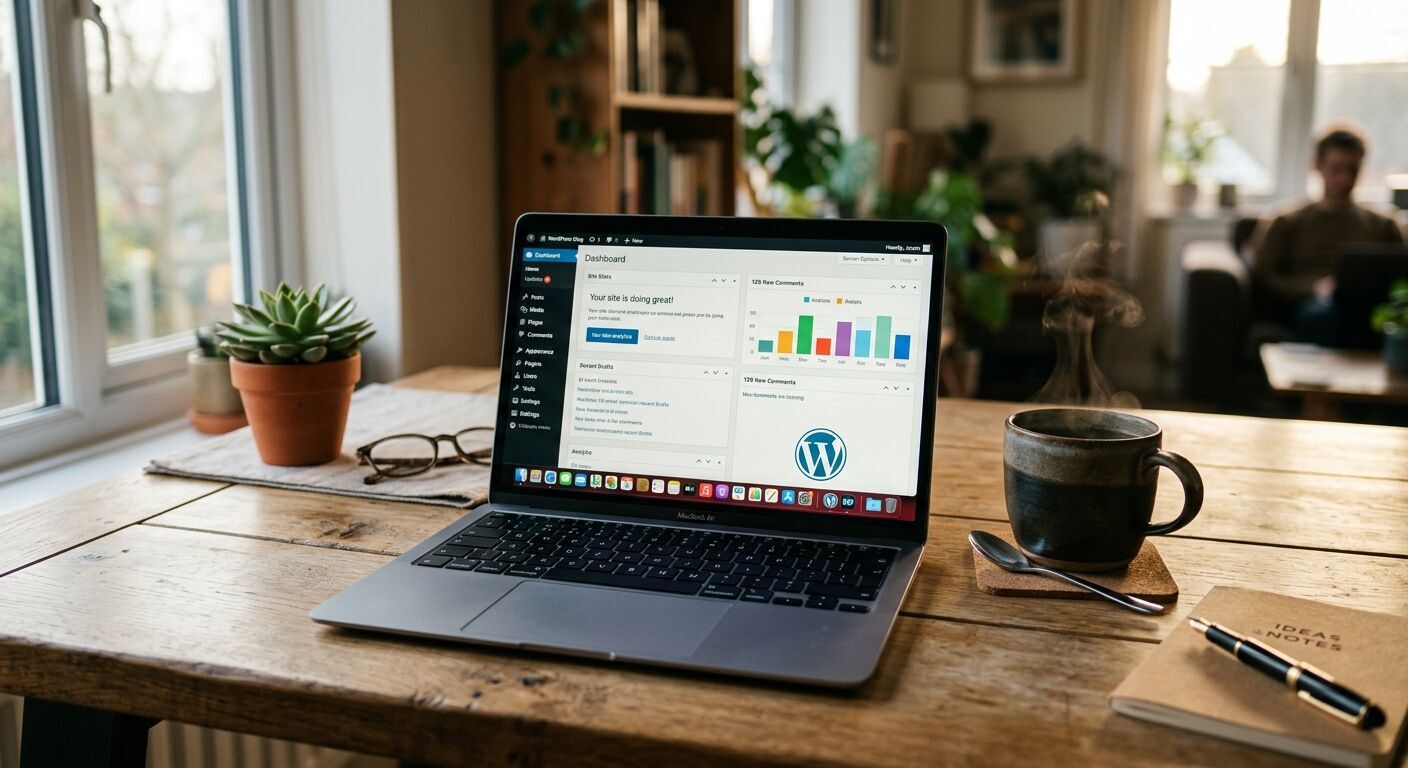
Congratulations! You've successfully installed WordPress, and now it's time to get acquainted with your website's control center: the WordPress Dashboard. When you first log in (by visiting yourdomain.com/wp-admin), you'll see a clean, organized interface with a main navigation menu typically running down the left side of your screen. This is where you'll manage virtually every aspect of your website.
On the left sidebar, you'll find key menu items such as:
Posts: For creating and managing blog content.
Pages: For static content like your “About Us” or “Contact” page.
Media: For uploading and organizing images and videos.
Comments: For moderating visitor feedback.
Appearance: Where you'll customize your site's look and feel through themes and the Customizer.
Further down the menu, “Plugins” allows you to extend your site's functionality, “Users” helps you manage who has access to your site, and “Settings” is where you'll configure everything from your site's title and tagline to its permalink structure. Don't feel overwhelmed; you'll naturally become more comfortable with the dashboard as you spend time exploring and building your site. This intuitive interface is designed to make website management accessible to everyone.
5. Dressing Up Your Site: Selecting and Installing a Theme
Now that WordPress is installed and you're familiar with the dashboard, it's time to give your website a stunning appearance! This is where WordPress themes come into play. A WordPress theme is a complete package that defines your website's overall design, layout, and some functionality, controlling elements like colors, fonts, headers, footers, and page layouts. It provides a consistent visual style across all pages without altering your site's content.
There's a vast world of themes available, both free and premium, each offering different aesthetics and features. Free themes can be found directly within the WordPress theme directory (Appearance > Themes > Add New) and are a great starting point, while premium themes often offer more advanced features, better performance optimization, and dedicated support. When choosing a theme, ensure it's:
Responsive: Looks good on all devices.
Lightweight: For faster speeds.
Compatible: With the latest version of WordPress and popular plugins.
Installing a theme is simple. For free themes, you can browse, install, and activate them directly from your WordPress dashboard. If you opt for a premium theme, you'll usually download it as a .zip file and then upload it through the “Add New” theme section. Once activated, you can typically customize your theme's appearance through the “Appearance” menu, either using the WordPress Customizer or, for newer “Block Themes,” the Full Site Editor, which allows visual editing of almost every part of your site using blocks.
6. Powering Up Your Site: Essential Plugins
While themes define your site's appearance, plugins are like apps for your WordPress website; they extend its functionality beyond the core capabilities, allowing you to add new features without any coding. With thousands of plugins available, you can add almost anything you can imagine, from contact forms and e-commerce stores to advanced security and performance enhancements.
Some essential plugin categories you should consider right after installation include:
Security: To protect your site from threats (e.g., Wordfence Security).
SEO: For optimizing your site for search engines (e.g., Yoast SEO, Rank Math).
Performance: To improve site loading speed (e.g., WP Rocket, WP Super Cache).
Contact Forms: To allow visitors to easily get in touch (e.g., Contact Form 7, WPForms).
To install a plugin, simply navigate to “Plugins” > “Add New” in your WordPress dashboard, search for the desired plugin, click “Install Now,” and then “Activate”. It's a good practice to only install plugins you truly need, as too many plugins can sometimes slow down your site or create conflicts. Always look for plugins with good ratings, frequent updates, and positive reviews to ensure they are reliable and well-maintained.
7. Crafting Your Message: Creating Pages and Posts
With your theme in place and essential plugins installed, it's time to start filling your website with content! WordPress makes it easy to create two primary types of content: Pages and Posts. Understanding the difference between them is key to structuring your site effectively.
Pages are generally used for static content that doesn't change frequently, such as your “About Us,” “Contact,” “Services,” or “Homepage”. They don't typically have categories or tags and often form the backbone of your website's main navigation. You can create a new page by going to “Pages” > “Add New” in your WordPress dashboard, where you'll use the intuitive Block Editor (also known as Gutenberg) to add text, images, headings, and other elements.
Posts, on the other hand, are typically used for dynamic, time-sensitive content like blog articles, news updates, or announcements. They are usually displayed in reverse chronological order and can be organized using categories and tags, which help visitors navigate your content and improve your site's SEO. To create a new post, simply go to “Posts” > “Add New” and use the same Block Editor interface to craft your content. Whether you're writing a blog post or designing a service page, the Block Editor provides a flexible way to build engaging content with blocks for paragraphs, images, videos, and more.
Building a beautiful website is fantastic, but you also want people to find it, right? That's where Search Engine Optimization (SEO) comes in. SEO is the process of optimizing your website to rank higher in search engine results, which can drive more organic traffic to your site. While SEO can get complex, getting the basics right with WordPress can make a significant difference.
The first step for WordPress SEO is usually installing a dedicated SEO plugin like Yoast SEO or Rank Math. These plugins are incredibly helpful as they provide tools to:
Manage meta titles and descriptions for your pages and posts.
Perform SEO analysis on your content.
Help you create an XML sitemap (a roadmap for search engines).
Beyond the plugin, remember to optimize your content itself. This includes using relevant keywords naturally throughout your text, creating structured and readable content with headings and subheadings, and optimizing images with descriptive alt text. Also, setting SEO-friendly permalinks (your post and page URLs) to include keywords rather than generic numbers is a crucial step. By focusing on these fundamental SEO practices, you'll set your WordPress site up for greater visibility in search results.
9. Speeding Things Up: Website Performance Improvements
In today's fast-paced digital world, website speed is paramount. A slow-loading website can frustrate visitors, increase bounce rates, and even negatively impact your search engine rankings. Fortunately, WordPress offers several ways to optimize your site's performance and ensure a smooth user experience.
One of the most effective strategies is implementing caching. Caching plugins like WP Rocket or WP Super Cache create static versions of your pages, which are served to users much faster than generating the page from scratch every time. This significantly reduces load times and improves overall efficiency. Many caching solutions also offer features like GZIP compression, which reduces file sizes, and lazy loading, which defers the loading of images and videos until they are needed on screen.
Image optimization is another critical step, as images often account for a large portion of a page's weight. Use tools or plugins to compress images without sacrificing quality and consider serving them in modern formats like WebP. Additionally, regularly updating WordPress, themes, and plugins is vital for performance and security. Minimizing unnecessary plugins and optimizing your database can also contribute to a faster, more efficient website.
10. Fortifying Your Site: Security Best Practices
Just like any other online asset, your WordPress website needs protection from potential threats. Implementing robust security measures is not just good practice; it's essential for safeguarding your data, your visitors' information, and your site's reputation. Neglecting security can lead to hacking attempts, data breaches, and other unwelcome issues.
A fundamental step is to always use strong, unique passwords for your WordPress admin account and any other user accounts. Beyond strong credentials, installing a reputable security plugin like Wordfence Security or Sucuri can provide comprehensive protection. These plugins often include features like:
Firewalls
Malware scanning
Login security to prevent unauthorized access
Real-time threat monitoring
Regularly updating your WordPress core, themes, and plugins is another critical security practice. Developers frequently release updates that include security patches for newly discovered vulnerabilities, so staying current is key to keeping your site secure. Also, consider implementing an SSL certificate (which gives you an “https://” URL), limiting login attempts, and backing up your site regularly, which we'll cover next.
11. Keeping Things Running Smoothly: Backups and Maintenance
Think of backups as your website's safety net; they are absolutely crucial for disaster recovery. No matter how careful you are, unexpected issues can arise, such as server failures, accidental deletions, or security breaches. Having a recent backup ensures you can quickly restore your website to a previous, working state, minimizing downtime and potential data loss.
Many hosting providers offer backup solutions, but it's often wise to have your own independent backup system in place. WordPress backup plugins like UpdraftPlus or VaultPress make it incredibly easy to schedule automatic backups of your entire site (files and database) and store them securely off-site, perhaps in cloud storage services like Dropbox or Google Drive. Regularly testing your backups is also a good habit to ensure they are functional when you need them most.
Beyond backups, ongoing maintenance is essential for your WordPress site's health and longevity. This includes:
Regularly updating WordPress core, themes, and plugins to ensure compatibility, security, and access to the latest features.
Periodically cleaning up your database by removing spam comments, old post revisions, and unused data, which can help improve performance.
A well-maintained site is a secure and performant site.
12. Ready for the World: Going Live and Beyond
You've done it! You've successfully navigated the steps to set up your WordPress website, configured its appearance, added essential functionality, and prepared it for optimal performance and security. Before you officially announce your site to the world, take a moment to review everything carefully. Check all your pages and posts for typos, ensure all links are working, and test your site's responsiveness on different devices to make sure it looks great everywhere.
Once you're satisfied, it's time to officially launch and start promoting your online presence! Share your website on social media, tell your friends and family, and consider exploring content marketing and further SEO strategies to attract more visitors. Remember, building a website is an ongoing journey, not a one-time event. The digital landscape is constantly evolving, and so should your website.
Keep learning, keep experimenting, and don't be afraid to try new things with your WordPress site. The WordPress community is vast and supportive, offering countless resources, tutorials, and forums where you can find answers to almost any question. You've laid a fantastic foundation; now go forth and make your mark on the web!
FAQ
Q: Is WordPress free?
A: The WordPress software (WordPress.org) itself is free to download and use. However, you will need to pay for a domain name and web hosting to make your website live on the internet. You might also choose to invest in premium themes or plugins, but there are many high-quality free options available.
Q: Do I need coding knowledge to use WordPress?
A: Absolutely not! WordPress is designed to be user-friendly for beginners, allowing you to build and manage a website without writing any code. While some advanced customizations might involve code, the vast majority of tasks can be accomplished through its intuitive interface and the use of themes and plugins.
Q: What if my site goes down or breaks?
A: This is why backups are so important! If your site goes down, your first step should be to contact your web host to see if it's a server-side issue. If not, you can restore your website from a recent backup. Regularly updating your themes and plugins, and testing them in a staging environment if possible, can help prevent issues.
Q: How often should I update WordPress, themes, and plugins?
A: You should update WordPress, themes, and plugins regularly as new versions become available. These updates often include important security patches, bug fixes, and new features. It's generally a good practice to log in at least once a month to check for and apply updates.
Q: What's the difference between WordPress.org and WordPress.com?
A: WordPress.org (self-hosted WordPress) is the free, open-source software that gives you complete control and flexibility over your website. WordPress.com is a hosted service that takes care of technical aspects for you but comes with more limitations on customization and plugin use, especially on free plans. This guide focuses on WordPress.org.
Key Takeaways:
WordPress is a powerful and flexible platform that allows anyone to create professional websites without coding.
A domain name (your web address) and web hosting (where your site lives) are essential starting points for any WordPress site.
Installing WordPress is often simplified by one-click installers provided by web hosts, making it a quick and easy process.
The WordPress dashboard is your central hub for managing all aspects of your website, from content to design and settings.
Themes control your website's appearance, while plugins extend its functionality, offering a vast array of customization options.
Creating pages for static content and posts for dynamic blog content forms the core of your website's information structure.
Basic SEO practices, including using an SEO plugin and optimizing content with keywords, are crucial for your site to be found by search engines.
Website performance can be significantly improved through caching, image optimization, and regular updates, leading to a better user experience.
Implementing security measures like strong passwords, security plugins, and regular updates protects your website from threats.
Regular backups and ongoing maintenance are vital for ensuring your website's longevity and providing a safety net against unforeseen issues.



 Alex Martun