Hello there! Ever wondered how some businesses seem to be everywhere online, consistently popping up in your searches, social media feeds, and favorite websites? It's not magic; it's the strategic power of digital marketing at play! In today's fast-paced digital world, simply having a website isn't enough. To truly connect with your audience and grow your business, you need to be visible where your potential customers spend their time online.
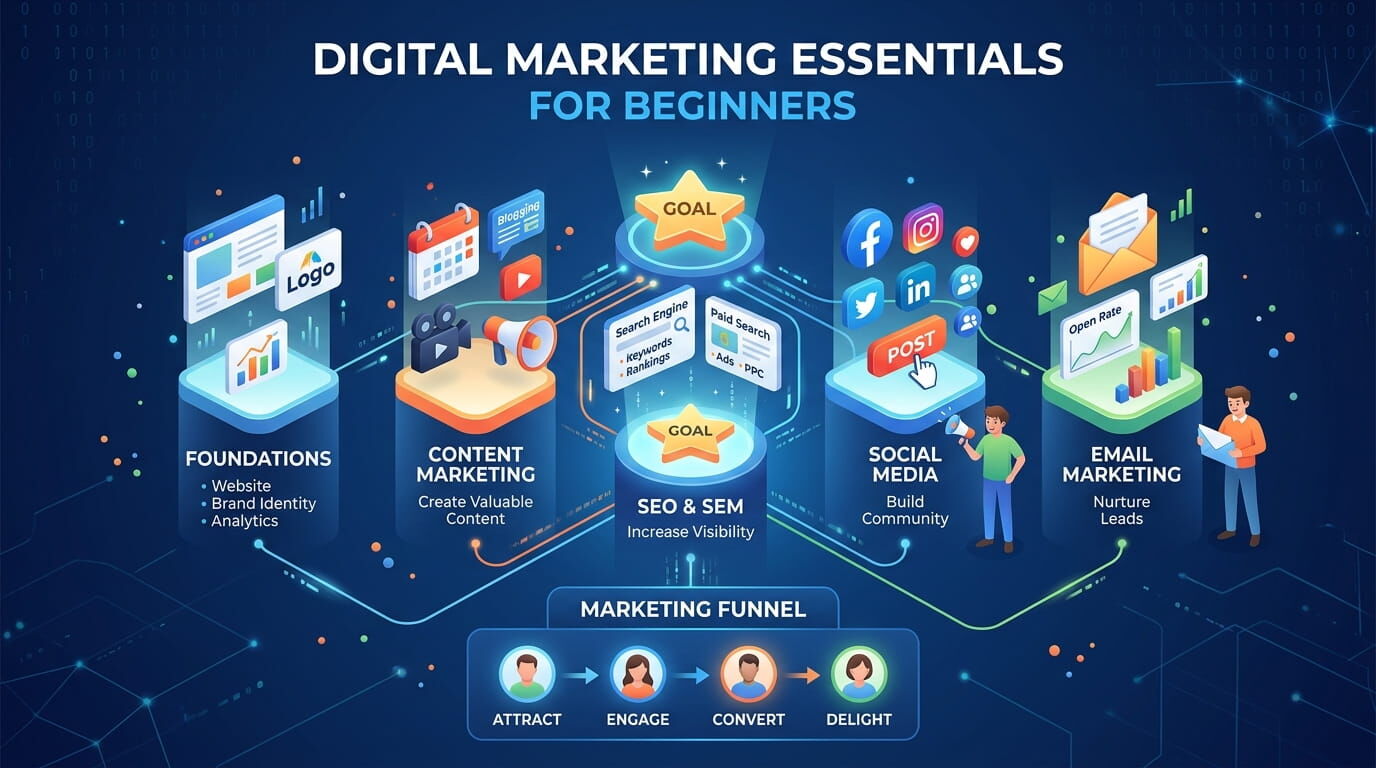
Digital marketing offers a robust toolkit of techniques and strategies, all designed to enhance your business's online presence. When effectively utilized, these tools can transform your company's digital footprint, making it more accessible, attractive, and engaging to potential customers. Let's dive into how modern digital marketing strategies, including SEO, social media, paid advertising, and content marketing, work together to dramatically increase your online visibility.
Table of Contents
The Foundation of Online Visibility
Search Engine Optimization (SEO): Becoming Google's Best Friend
Keyword Research and Optimization: The Art of Being Found
On-Page SEO: Polishing Your Website's Inner Workings
Off-Page SEO: Building Authority Beyond Your Site
Social Media Marketing: Connecting and Engaging Where Your Audience Lives
Crafting a Social Media Strategy: More Than Just Posting
Paid Advertising: Instant Visibility and Targeted Reach
Content Marketing: Providing Value and Building Trust
The Power of Integrated Digital Marketing
Measuring Success and Adapting Strategies
Key Takeaways
1. The Foundation of Online Visibility
In the bustling digital landscape, online visibility is absolutely paramount for any business looking to thrive. It's about how easily your brand can be found and recognized across various digital platforms, from search engines to social media. Think of it this way: if your business isn't visible, how will potential customers ever find you? The competition is fierce, and simply existing online isn't enough; you need to stand out.
A strong online presence isn't just about showing up; it's about making a memorable impression. It directly impacts your website traffic, customer acquisition rates, and ultimately, your conversions and revenue. When people can easily find your business, they're more likely to engage with your brand, learn about your offerings, and eventually become loyal customers. It's the first crucial step in building a successful digital footprint.
This enhanced visibility offers a multitude of benefits that extend beyond mere exposure. It helps establish trust and credibility for your brand. Businesses that appear prominently in search results or consistently across platforms are often perceived as more trustworthy and authoritative by consumers. Moreover, it provides a crucial competitive advantage, giving you an edge in crowded markets.
Ultimately, boosting online visibility is about strategically positioning your brand in front of the right people at the right time. It's about ensuring that when a potential customer is looking for a product or service you offer, your business is not just an option, but a readily apparent and appealing choice. This requires a multifaceted approach, utilizing various digital marketing techniques in a cohesive manner.
Search Engine Optimization, or SEO, is the bedrock of increasing your online visibility. At its core, SEO is the process of enhancing your website so that it ranks higher in search engine results pages (SERPs) like Google, Bing, and Yahoo. Imagine Google as a vast library; SEO is the process that ensures your website isn't just a book on the shelf, but one that lands directly in the hands of readers, or in this case, potential customers.
Why is this so important? Firstly, increased visibility in search results means more organic traffic to your website. More traffic often translates into more leads, more customers, and ultimately, more revenue for your business. It's a continuous investment that can offer significant long-term returns, as well-optimized content can continue to attract visitors for months or even years without ongoing advertising costs.
Beyond just traffic, strong SEO helps build credibility and trust for your brand. Websites that appear at the top of search engine results are often perceived as more trustworthy and authoritative by users. By optimizing your site, you're not just improving your rankings; you're enhancing your brand's reputation and establishing it as an information hub in your industry.
SEO strategies have come a long way from the early days of keyword stuffing. Today, the focus is firmly on providing value to users and improving their overall experience on your website. This holistic approach ensures that your website is not only discoverable by search engines but also genuinely helpful and engaging for visitors, leading to longer dwell times and lower bounce rates.
3. Keyword Research and Optimization: The Art of Being Found
At the heart of any successful SEO strategy lies thorough keyword research and optimization. Keywords are the specific words and phrases your target audience uses when searching for products, services, or information related to your business. By identifying these crucial terms, you can strategically optimize your website's content to rank higher in search results for them.
This process involves more than just guessing; it requires utilizing specialized tools like Google Keyword Planner or SEMrush to uncover relevant and high-intent keywords. It's also vital to consider "long-tail keywords," which are more specific, longer phrases that often indicate a more defined search intent. Targeting these can help you capture highly qualified traffic.
Once you've identified your target keywords, the next step is to seamlessly incorporate them into your website's various elements. This includes your meta tags (titles and descriptions), headings, and, most importantly, your content. However, it's a delicate balance: the keywords should flow naturally and enhance the user experience, not detract from it. Over-optimizing or "keyword stuffing" can actually harm your rankings.
The art of keyword optimization isn't just about placement; it's about understanding the intent behind the search. By creating content that directly answers the questions or fulfills the needs associated with your target keywords, you increase your chances of appearing prominently in relevant search results. This ensures that the traffic you attract is not only high in volume but also high in quality, leading to better engagement and conversion rates.
4. On-Page SEO: Polishing Your Website's Inner Workings
On-page SEO refers to all the optimization strategies you implement directly on your website to improve its search engine rankings. These are the elements you have full control over, and by fine-tuning them, you can significantly enhance your site's visibility. It's about making your website as clear and helpful as possible for both search engines and human visitors.
Key aspects of on-page SEO include optimizing your website's structure, which means ensuring a logical flow and easy navigation. Your meta tags—specifically page titles and meta descriptions—are crucial. These snippets appear in search results and should be compelling, keyword-rich, and accurately describe the content of each page, encouraging users to click through.
Beyond meta tags, optimizing your headings (H1, H2, H3, etc.) with relevant keywords helps search engines understand the hierarchy and main topics of your content. High-quality, relevant, and engaging content is perhaps the most important on-page factor. Search engines prioritize websites that provide valuable information to users, so regularly updating your site with fresh, informative content is essential. This includes blog posts, articles, videos, and infographics that cater to your audience's interests and needs.
Other critical on-page elements include mobile optimization, ensuring your website is responsive and functions well on all devices, as Google considers mobile-friendliness a significant ranking factor. Page speed is another vital component; faster loading pages enhance user experience and positively impact search rankings. Lastly, improving user experience (UX) through intuitive navigation, clear calls-to-action, and an appealing design encourages longer dwell times and reduces bounce rates, signaling to search engines that your site is valuable.
5. Off-Page SEO: Building Authority Beyond Your Site
While on-page SEO focuses on what's within your website, off-page SEO involves actions taken outside your website to improve its visibility and authority. These strategies signal to search engines that your website is trustworthy, reputable, and a valuable resource in your industry. It's like getting positive referrals from other respected sources online.
One of the most effective and important off-page SEO techniques is link building. This involves acquiring high-quality backlinks from reputable and authoritative websites. Search engines view these backlinks as "votes of confidence" from other sites, indicating that your website is trustworthy and an authority on its subject matter. Strategies for link building include guest posting on other blogs, collaborating with local organizations, or asking authoritative brands to review your products.
Social media engagement also plays an indirect, yet significant, role in off-page SEO. Actively engaging with your audience on social media platforms, sharing your content, responding to comments, and encouraging social sharing can generate "social signals" like likes, shares, and retweets. While not a direct ranking factor, these signals can increase your content's exposure and drive traffic, which can indirectly influence your search engine rankings and attract more natural backlinks.
Other off-page factors include online reviews and local SEO strategies. For businesses with a physical presence, optimizing for local searches by registering on Google My Business and other local directories, and ensuring consistent Name, Address, Phone (NAP) information across all platforms, is crucial. Positive customer reviews on various platforms also contribute to your off-page SEO and overall brand reputation, enhancing credibility and attracting more local customers.
Social media marketing is a dynamic and essential component of increasing online visibility in today's digital landscape. It involves using platforms like Facebook, Instagram, LinkedIn, X (formerly Twitter), TikTok, and others to connect with your audience, grow your brand, promote your products or services, and achieve business goals. Unlike traditional one-way advertising, social media fosters two-way dialogue, allowing for genuine interaction.
One of the primary reasons social media marketing is so powerful for visibility is its ability to reach a wide audience. By establishing a strong presence on these platforms, you can engage with existing customers and attract new ones who might not have found your brand through other channels. It's about being where your potential customers are already spending their time online, making your brand more discoverable and credible.
Social media platforms offer sophisticated targeting options, allowing businesses to reach specific demographics, interests, and behaviors, ensuring your message reaches the right people at the right time. This precision in targeting maximizes the effectiveness of your marketing efforts, driving relevant traffic and engagement. Moreover, consistent activity and engagement on these platforms can lead to increased brand awareness and recall.
Beyond direct promotion, social media marketing helps humanize your brand. By sharing engaging content, responding to comments and messages, and interacting with followers, other brands, and influencers, you build a vibrant online community that not only knows your brand but loves it. This fosters tighter bonds, establishes brand authority, and can drive significant traffic back to your website, ultimately contributing to higher conversion rates and sales.
7. Crafting a Social Media Strategy: More Than Just Posting
A successful social media presence goes far beyond simply posting content. It requires a well-defined and strategic approach to maximize its impact on your online visibility. Without a clear strategy, your efforts might be scattered and less effective in reaching your business objectives. It's about purposeful engagement, not just presence.
The first step in crafting an effective social media strategy is to deeply understand your target audience. What are their demographics, interests, and, most importantly, their social media habits? By using social media analytics tools, you can gather data about when your followers are most active and what type of content they engage with most. This insight allows you to tailor your content and messaging to resonate specifically with them.
Next, focus on creating high-quality, engaging content that stops people mid-scroll. This can include a variety of formats such as compelling images, informative videos, interactive polls, and insightful articles. Storytelling is a powerful tool on social media, making your content more appealing and shareable, which naturally increases your organic reach. It's crucial to prioritize quality over quantity and maintain consistency in your posting schedule.
Actively engaging with your audience is paramount. Respond to comments, messages, and mentions to build meaningful connections. Encourage user-generated content, like customer reviews and photos, as this significantly boosts your brand's credibility and organic reach. Leveraging relevant hashtags, keywords, and geotags also helps optimize your social media content for search engines, making your posts more discoverable to a wider, targeted audience.
8. Paid Advertising: Instant Visibility and Targeted Reach
Paid advertising, often referred to as paid media or PPC (Pay-Per-Click), is a powerful digital marketing strategy that provides immediate visibility and highly targeted reach. Unlike organic efforts that build over time, paid ads can place your business directly in front of potential customers almost instantly. This is particularly beneficial for new product launches, promotions, or in highly competitive markets where organic rankings can take longer to achieve.
The beauty of paid advertising lies in its precise targeting capabilities. Platforms like Google Ads and social media advertising tools allow you to show your ads to specific demographics, interests, behaviors, locations, and even based on past interactions with your website. This ensures that your advertising budget is spent efficiently, reaching the people most likely to be interested in your products or services, thereby maximizing your return on investment (ROI).
Paid advertising comes in various forms, each suited to different marketing objectives. Search engine advertising places your ads at the top or bottom of search engine results pages (SERPs) for targeted keywords, capturing audiences actively looking for solutions you provide. Display advertising uses visually oriented ads on various websites, effective for brand awareness and retargeting. Social media advertising, on platforms like Facebook and Instagram, allows for demographic targeting and visually engaging ad formats to drive engagement. Video advertising, especially on YouTube, offers highly engaging opportunities for storytelling.
Even if a user doesn't click on your ad, seeing your brand name and message at the top of search results or in their social feed contributes to brand recall and familiarity, progressively increasing your online presence and recognition. Paid ads also provide measurable results, allowing you to track performance and optimize future campaigns for better outcomes. When combined with organic SEO, paid advertising creates a stronger overall search presence and delivers a comprehensive approach to online visibility.
9. Content Marketing: Providing Value and Building Trust
Content marketing is a strategic approach focused on creating and distributing valuable, relevant, and consistent content to attract and retain a clearly defined audience. Instead of directly pitching products or services, it aims to educate, entertain, or inspire, thereby building trust and establishing your brand as an industry authority. It's about providing value that goes beyond the transactional.
High-quality content is a cornerstone of effective digital marketing, working hand-in-hand with SEO to improve your website's visibility to search engines. When you consistently publish informative and engaging content like blog posts, articles, videos, podcasts, and infographics, you not only attract visitors but also encourage them to return repeatedly, deepening their relationship with your brand. This regular influx of fresh content signals to search engines that your site is active and relevant, prompting them to crawl it more frequently.
The power of content marketing lies in its ability to speak directly to your target audience's needs, answering their questions and offering solutions to their problems. This authentic approach fosters a sense of trust and authenticity that paid advertising alone often cannot achieve. When customers find value in your content, they are more likely to interact with it, share it with their networks, and ultimately become loyal customers.
Furthermore, effective organic content marketing is highly cost-effective in the long run. Once created, well-optimized content can continue to drive traffic and engage users without requiring additional payment, yielding a much higher return on investment compared to short-lived paid advertisements. By consistently providing value, content marketing builds a loyal community around your brand, making it an indispensable strategy for sustained online visibility and growth.
10. The Power of Integrated Digital Marketing
While each digital marketing strategy—SEO, social media, paid advertising, and content marketing—is powerful on its own, their true potential is unleashed when they are integrated into a cohesive and unified approach. Integrated digital marketing ensures that all your marketing efforts work in harmony, delivering a consistent core message to your audience across multiple channels. Think of it as an orchestra, where each instrument plays its part, but together they create a beautiful symphony.
This synergistic approach offers numerous substantial benefits for enhancing online visibility and achieving business goals. Firstly, it amplifies brand awareness and recall. By consistently appearing and delivering a uniform message across diverse digital touchpoints, customers are more likely to recognize, remember, and stay loyal to your brand. This widespread exposure makes your message more visible and helps your brand stay top-of-mind.
Integrated strategies lead to a more efficient use of marketing resources and better data insights. By collecting and analyzing data from various channels, businesses gain a comprehensive view of customer interactions and behaviors. These deeper insights enable more precise audience targeting and personalization, allowing you to create more relevant content and tailored messages that resonate with specific customer segments.
Moreover, an integrated approach ensures consistency in your brand's tone and voice across all channels, which is crucial for building brand authority and trust. This unified experience minimizes confusion for customers and builds loyalty. For example, SEO data can inform paid advertising campaigns, and social media engagement can highlight content that resonates, leading to a virtuous cycle of improved performance across all strategies.
11. Measuring Success and Adapting Strategies
One of the significant advantages of digital marketing is its inherent measurability. Unlike traditional marketing, almost every aspect of your digital efforts can be tracked, analyzed, and optimized. This data-driven approach is crucial for understanding what's working, what isn't, and how to continuously improve your online visibility strategies. Regularly monitoring your performance is key to ongoing success.
Key performance indicators (KPIs) can vary depending on your specific goals, but common metrics include:
Analyzing these metrics allows you to gain deeper insights into customer behavior and the effectiveness of your campaigns. For instance, if a particular piece of content is driving significant traffic but not many conversions, you might need to optimize your calls-to-action or landing page experience. If a paid ad campaign is underperforming, you can adjust targeting, ad copy, or bidding strategies in real-time.
The digital landscape is constantly evolving, with search engine algorithms changing, new social media trends emerging, and consumer behaviors shifting. Therefore, continuous analysis and adaptation are not just beneficial but essential. Regularly reviewing your data, testing new approaches, and staying updated with the latest strategies and best practices ensures that your digital marketing efforts remain effective and continue to boost your online visibility. This agile approach allows you to optimize strategies based on real-time insights and maintain a competitive edge.
FAQ
Q1: What is online visibility?
A1: Online visibility refers to how easily and frequently your business or brand can be found across various digital channels, such as search engines, social media platforms, and other websites. It's about your presence and discoverability in the digital world.
Q2: Why is digital marketing important for increasing online visibility?
A2: Digital marketing is crucial because it provides a comprehensive set of strategies (SEO, social media, paid ads, content marketing) designed to make your brand discoverable, engaging, and authoritative online, reaching potential customers where they spend their time.
Q3: How does SEO contribute to online visibility?
A3: SEO helps your website rank higher in search engine results for relevant keywords, leading to more organic (non-paid) traffic. Higher rankings increase your visibility and establish your brand as a credible source.
Q4: Can social media marketing really increase my online visibility?
A4: Absolutely! A strong social media presence makes your brand more discoverable and credible, allowing you to connect with a wider audience, engage with potential customers, and drive traffic to your website.
Q5: What are the benefits of paid advertising for online visibility?
A5: Paid advertising offers immediate visibility, placing your business at the top of search results or in targeted social media feeds. It allows for precise audience targeting and can drive high-intent traffic quickly, significantly boosting brand exposure.
Q6: How does content marketing improve online visibility?
A6: Content marketing creates valuable, relevant content that attracts and engages your target audience, improves your SEO by making your website more visible to search engines, and establishes your brand as an authority, fostering trust and loyalty.
Q7: What is integrated digital marketing?
A7: Integrated digital marketing is a strategic approach that combines various online marketing techniques (SEO, social media, paid ads, content) into a unified strategy to ensure consistent messaging and maximum impact across all digital channels.
Key Takeaways
Online visibility is essential for business growth, impacting traffic, leads, and revenue.
Search Engine Optimization (SEO) is fundamental, improving search rankings and building trust.
Keyword research is the foundation of SEO, ensuring your content is found by the right audience.
On-page SEO (website structure, content, speed, mobile-friendliness) and off-page SEO (backlinks, social signals) both contribute to higher rankings.
Social Media Marketing connects you with your audience, builds community, and increases brand awareness through engaging content and interactions.
Content Marketing provides value, establishes authority, and fuels organic visibility by attracting and retaining an engaged audience.
Integrated Digital Marketing combines all these strategies for a cohesive message and amplified results, leading to enhanced brand visibility and better business outcomes.
Continuous measurement and adaptation of strategies based on data are crucial for sustained success in the evolving digital landscape.






 Alex Martun