Hey there, fellow digital adventurer! Are you ready to make your website shine brighter in the vast expanse of the internet? In today's crowded online world, simply having a website isn't enough; you need to be found. And for most people, that journey starts with one crucial place: Google Search.
Imagine your website as a fantastic storefront in a bustling city. If it's tucked away on a forgotten side street, very few people will ever stumble upon it. Google Search visibility is like moving your store to the busiest intersection, putting a spotlight on your products or services for everyone who walks by looking for exactly what you offer. It's about ensuring your target audience can easily discover you when they're actively searching for information, solutions, or products related to your business.
This isn't just about vanity metrics; it's about real growth. Higher visibility on Google leads to more organic traffic, which can translate into more leads, customers, and ultimately, a thriving online presence. Studies show that a significant portion of organic traffic goes to the top results on the first page of Google, so being there truly makes a difference.
This article will be your comprehensive guide, a friendly tutorial walking you through the essential steps and expert insights to dramatically improve your Google Search visibility. We'll break down complex concepts into actionable strategies, helping you navigate the exciting world of Search Engine Optimization (SEO) to achieve better online growth. So, let's dive in and start making your website impossible to miss!
Table of Contents
Understanding Google Search Visibility Basics
The Cornerstone: Keyword Research
On-Page SEO Essentials
Technical SEO: The Hidden Foundations
Building Authority: Backlinks and Off-Page SEO
Content is King (and Queen!): Creating High-Quality Content
Local SEO for Local Businesses
Monitoring and Analytics: Tracking Your Progress
Staying Updated: The Ever-Evolving SEO Landscape
Frequently Asked Questions (FAQ)
Key Takeaways
1. Understanding Google Search Visibility Basics
Google Search visibility, in simple terms, refers to how easily and frequently your website appears in Google's search results when people look for things related to what you offer. It's about being present and noticeable to your potential audience at the exact moment they need you. If your website is visible, it means Google understands what your site is about and deems it relevant and valuable for specific search queries.
This visibility is incredibly important for any online endeavor, whether you're running a small blog, an e-commerce store, or a large corporate website. The more visible you are, the more organic traffic you attract. This organic traffic consists of users who are actively searching for information or solutions, making them highly qualified leads for your business. More traffic often translates to more opportunities for engagement, conversions, and business growth.
At its core, Google operates through a sophisticated three-step process: crawling, indexing, and ranking. First, Google's bots, also known as crawlers or spiders, scan the web by following links from page to page, discovering new or updated content. Next, they process this content and add it to a massive database called the Google Index. Finally, when a user searches for something, Google's algorithms sort through these indexed pages and rank them based on relevance, quality, and hundreds of other factors to provide the best possible results.
The practice of improving your Google Search visibility is known as Search Engine Optimization (SEO). SEO involves a variety of strategies and techniques aimed at making your website more appealing to search engines, thus helping it rank higher in search results. It’s a continuous process that requires a good understanding of how search engines work and what users are looking for.
2. The Cornerstone: Keyword Research
Keywords are the backbone of search. They are the words and phrases that people type into search engines like Google when they're looking for information, products, or services. Understanding these keywords is the very first and most crucial step in any successful SEO strategy, as they bridge the gap between what people are searching for and the content you provide.
Effective keyword research isn't just about guessing what people might type. It's about strategically discovering the exact terms your target audience uses, understanding their search intent, and evaluating the competition for those terms. This process helps you align your content directly with the needs and questions of your potential customers, ensuring that you're creating content that genuinely resonates with them.
There are many excellent tools available to help you with keyword research. Free options like Google Keyword Planner and Google Trends can give you a solid starting point by suggesting related terms and showing their popularity over time. For more in-depth analysis, paid tools like Ahrefs, Semrush, or KWFinder offer advanced metrics such as keyword difficulty, search volume, and competitor analysis, which are incredibly valuable for refining your strategy.
When conducting keyword research, consider both short-tail and long-tail keywords. Short-tail keywords are broad, often one or two words, and typically have high search volume but also high competition (e.g., "SEO tips"). Long-tail keywords, on the other hand, are more specific phrases (three or more words), generally have lower search volume but also less competition, and often indicate a clearer user intent (e.g., "how to improve Google search visibility for small businesses"). Targeting a mix of both can help you reach a wider audience while also capturing highly qualified traffic.
Short-tail keywords: Broad terms with high volume and high competition.
Long-tail keywords: Specific phrases with lower volume, less competition, and clearer user intent.
3. On-Page SEO Essentials
On-Page SEO refers to all the optimization efforts you make directly on your website's pages to improve their search engine rankings. It’s about making your content as clear, relevant, and engaging as possible for both search engines and human visitors. By meticulously optimizing these elements, you help Google understand exactly what your page is about and how valuable it is to users.
One of the first things people see in search results is your title tag and meta description. Your title tag is the clickable headline in the search results, and it should be compelling, keyword-optimized, and accurately reflect the page's content, ideally under 60 characters. The meta description is the short summary below the title. While it doesn't directly influence rankings, a well-crafted, informative meta description (around 150-160 characters) can significantly improve your click-through rate (CTR) by enticing users to choose your page.
The quality and relevance of your content are paramount. Google prioritizes content that is informative, relevant, well-researched, and provides genuine value to users, addressing their queries comprehensively. This includes ensuring your primary keywords are naturally integrated into the content, especially within the first 100 words, but always avoid "keyword stuffing," which can harm your rankings. Focus on creating in-depth, unique insights that add value to your audience.
Proper heading structure is another critical on-page element. Using H1, H2, H3 tags (and so on) helps organize your content logically, making it easier for both users and search engines to navigate and understand the hierarchy of information. Your main title should be an H1, and subheadings should reflect the actual ideas in each section, incorporating relevant keywords naturally. Additionally, optimizing your images with descriptive file names and alt text helps search engines understand their content, and compressing images improves page load speed, which is a ranking factor.
4. Technical SEO: The Hidden Foundations
While on-page SEO focuses on what's visible, Technical SEO deals with the invisible but crucial elements that help search engines crawl, index, and understand your website effectively. These technical foundations are vital for ensuring your site is accessible and performs well, ultimately impacting its search visibility. A technically sound website is essential for search engines to index and comprehend your content.
Site speed is a critical factor for both user experience and search engine rankings. Users expect fast-loading pages, and Google rewards websites that deliver this. Tools like Google's PageSpeed Insights can help you evaluate and optimize your page load speed. Even a slight improvement can significantly reduce bounce rates and improve engagement, signaling to Google that your site provides a good experience.
In today's digital landscape, mobile-friendliness is non-negotiable. Google uses mobile-first indexing, meaning it primarily uses the mobile version of your content for indexing and ranking. Ensuring your website is responsive, easy to navigate on smaller screens, and loads quickly on mobile devices is essential for reaching the majority of internet users and securing good rankings.
A clear and logical site architecture, along with robust internal linking, guides both users and search engine crawlers through your content. This helps distribute "link equity" across your site and tells Google which pages are most important. XML sitemaps and a properly configured robots.txt file are also crucial. An XML sitemap lists all the important pages on your site, helping search engines discover them, while robots.txt instructs crawlers which areas of your site to access or avoid. Other important technical aspects include:
Site speed: Crucial for user experience and ranking.
Mobile-friendliness: Essential for mobile-first indexing.
XML sitemaps: Helps search engines discover your pages.
HTTPS security: Ensures a secure connection for users.
Off-Page SEO encompasses all the activities that happen outside of your website to improve its search engine ranking. The most prominent and impactful of these is building high-quality backlinks. Backlinks are essentially "votes of confidence" from other websites to yours; when a reputable site links to your content, it signals to Google that your content is valuable, trustworthy, and authoritative.
The quality of backlinks far outweighs the quantity. A few authoritative backlinks from well-respected, relevant sites in your niche are significantly more valuable than numerous low-quality or spammy links. Google's algorithms are adept at identifying and penalizing manipulative link schemes, so focusing on earning genuine, high-quality links is paramount. These quality backlinks contribute to your website's E-E-A-T (Experience, Expertise, Authoritativeness, and Trustworthiness) score, which is a key factor in Google's ranking evaluation.
There are several effective strategies for earning valuable backlinks. Creating exceptional, "linkable" content such as in-depth guides, original research, or compelling infographics can naturally attract links. Another powerful method is guest posting, where you write valuable content for other reputable websites in your industry and include a link back to your site within the content or author bio. This not only secures a backlink but also builds your brand's reputation as an expert.
Beyond guest posting, consider strategies like digital PR, where you promote your best content to journalists and relevant publications, or broken link building, where you identify broken links on other sites and suggest your content as a replacement. Turning unlinked brand mentions into links is also a highly effective tactic; if someone mentions your brand without linking to your site, simply reach out and politely ask them to add a link.
6. Content is King (and Queen!): Creating High-Quality Content
At the heart of every successful SEO strategy lies truly high-quality content. It's not just about stuffing keywords into paragraphs; it's about creating valuable, relevant, and engaging content that genuinely helps and satisfies your audience. Google's algorithms are increasingly sophisticated at identifying and rewarding content that demonstrates experience, expertise, authoritativeness, and trustworthiness (E-E-A-T), prioritizing it in search results.
High-quality content goes beyond just text. Consider incorporating various content formats to keep your audience engaged and cater to different preferences. This could include in-depth blog posts, informative videos, interactive infographics, comprehensive guides, or even podcasts. The key is to present information in the most digestible and appealing way for your target users, always with an eye toward solving their problems or answering their questions.
Understanding user intent is crucial when creating content. What is the user really trying to find or achieve when they type a specific query into Google? Your content should directly address that intent, whether it's informational (looking for answers), transactional (ready to buy), or navigational (looking for a specific site). Creating content that aligns perfectly with user intent is a significant ranking factor and contributes to a better user experience.
Regularly updating and refreshing your content is also vital for maintaining its relevance and "freshness." Google tends to favor up-to-date information, especially for topics where timeliness is important. Reviewing old blog posts, adding new insights, updating statistics, or expanding on existing sections can give your content a significant boost and signal to Google that your site is alive and continuously providing accurate information.
7. Local SEO for Local Businesses
For businesses with a physical location or those that serve a specific geographic area, Local SEO is an absolute game-changer. It's a specialized branch of SEO focused on optimizing your online presence to attract customers in your immediate vicinity when they perform local searches. Think "best coffee shop near me" or "plumber in [your city]."
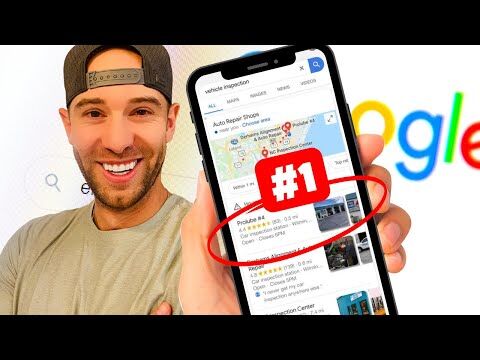
The cornerstone of any local SEO strategy is your Google Business Profile (GBP). Formerly known as Google My Business, this free listing allows you to provide crucial information about your business directly to Google, including your name, address, phone number (NAP), business hours, services, and customer reviews. A fully optimized and regularly updated GBP listing is essential for appearing in Google's local pack (the map results) and local search results.
Local citations and online reviews play a significant role in building trust and visibility for local businesses. Citations are mentions of your business's NAP information on other websites, such as online directories, social media platforms, and local business listings. Consistency across all these platforms is key. Positive customer reviews, particularly on your Google Business Profile, act as strong social proof and can heavily influence local ranking factors. Actively encouraging satisfied customers to leave reviews can significantly boost your local presence.
Creating localized content on your website is another powerful tactic. This involves developing specific service or location pages that target distinct geographic areas or neighborhoods. Incorporate local keywords naturally within your website's content, title tags, and meta descriptions to help search engines understand your relevance to local queries. Building relationships with other local businesses and earning backlinks from local news outlets or community websites can also further strengthen your local SEO efforts.
8. Monitoring and Analytics: Tracking Your Progress
Improving your Google Search visibility isn't a one-and-done task; it's an ongoing journey that requires constant monitoring and adaptation. Without tracking your progress, you won't know what's working, what needs improvement, or how your efforts are impacting your bottom line. Data-driven decisions are key to sustainable SEO success.
Two indispensable, free tools from Google are your best friends here: Google Search Console (GSC) and Google Analytics (GA). While they both offer valuable data, they serve different, complementary purposes. Google Search Console provides direct insights into how your website performs in Google search results, showing you metrics like impressions (how many times your site appeared in search), clicks, average ranking position, and the specific search queries that bring users to your site. It's your window into how Google sees your site.
Google Analytics, on the other hand, focuses on user behavior after visitors land on your site. It tracks things like which pages they visit, how long they stay, their bounce rate (percentage of single-page sessions), and conversion paths. By combining data from both tools, you get a comprehensive picture: Search Console tells you how users find you, and Analytics tells you what they do once they're on your site.
Key metrics to watch closely include:
Keyword rankings: Your position in search results for target keywords.
Organic traffic: The number of visitors coming from search engines.
Click-Through Rate (CTR): The percentage of people who click your listing after seeing it.
Bounce rate: The percentage of visitors who leave your site after viewing only one page.
Page speed: How quickly your pages load.
Conversions: The desired actions users take (e.g., purchases, form submissions).
Regularly reviewing these metrics allows you to identify high-performing content, uncover technical issues, understand user engagement, and make informed adjustments to your SEO strategy to continue driving meaningful results.
9. Staying Updated: The Ever-Evolving SEO Landscape
The world of SEO is dynamic and constantly evolving, much like a living organism. Google regularly updates its search algorithms to improve the quality and relevance of its search results for users. These algorithm updates, ranging from minor tweaks to major "core updates," can significantly impact website rankings and visibility. What worked yesterday might not be as effective tomorrow, making continuous learning and adaptation essential.
Google's core updates, in particular, are broad changes to their ranking systems and are not usually aimed at specific issues or penalties. Instead, they reflect a broader re-evaluation of how content is ranked, with Google refining its systems to better surface results that are genuinely useful, relevant, and aligned with user intent. These updates often emphasize factors like content quality, user experience, and E-E-A-T (Experience, Expertise, Authoritativeness, and Trustworthiness).
The importance of continuous learning cannot be overstated. Keeping up with the latest SEO news, industry blogs, and Google's official announcements (like the Google Search Central Blog) will help you understand algorithm changes and adapt your strategies proactively. Attending webinars, joining SEO communities, and even running your own tests can provide invaluable insights into the current best practices.
Ultimately, Google's overarching goal is to provide the best possible experience for its users. Therefore, the most resilient SEO strategy is one that consistently prioritizes the user. Focus on creating an excellent user experience, producing high-quality and helpful content, and building a trustworthy online presence. By aligning your efforts with Google's mission to serve its users, you'll be well-positioned to navigate algorithm changes and maintain strong search visibility over the long term.
10. Frequently Asked Questions (FAQ)
Q: How long does it take to see results from SEO?
A: SEO is a long-term strategy, and results typically don't happen overnight. While some minor improvements might be seen in weeks, it often takes several months (3-6 months or even up to 12 months) to see significant impacts from an integrated SEO strategy. Consistency and patience are key.
Q: Is SEO expensive?
A: The cost of SEO varies widely depending on the scope of work, your competition, and whether you do it yourself or hire an agency. While there are many free tools and techniques you can implement, investing in paid tools or professional services can yield faster and more substantial results.
Q: Can I do SEO myself?
A: Absolutely! Many aspects of SEO, such as keyword research, on-page optimization, and content creation, can be learned and implemented by individuals or small business owners. This guide provides a great starting point. However, for more complex technical issues or highly competitive niches, consulting with an SEO expert or agency can be beneficial.
Q: What are common SEO mistakes to avoid?
A: Common mistakes include keyword stuffing, creating low-quality or thin content, neglecting mobile optimization, ignoring technical SEO issues (like slow site speed), building manipulative or spammy backlinks, and not monitoring your performance with tools like Google Search Console and Google Analytics. Focusing on user experience and genuine value is critical to avoiding pitfalls.
Q: What is E-E-A-T?
A: E-E-A-T stands for Experience, Expertise, Authoritativeness, and Trustworthiness. It's a concept Google uses to evaluate the quality of content and the credibility of its creators and website. Building E-E-A-T is crucial for ranking highly in today's search results.
11. Key Takeaways
Google Search visibility is paramount for online growth, driving organic traffic and potential conversions.
Thorough keyword research is the foundation, helping you understand user intent and target relevant terms.
On-page SEO optimizes your website's content and structure, including title tags, meta descriptions, headings, and high-quality, relevant content.
Technical SEO ensures your website is crawlable, indexable, fast, and mobile-friendly, providing a solid foundation for search engines.
High-quality backlinks from authoritative sites are crucial for building your website's authority and trust with Google.
Creating genuinely helpful, engaging, and fresh content that addresses user intent is a top ranking factor.
Local SEO is vital for businesses targeting customers in specific geographic areas, with Google Business Profile being key.
Regularly monitoring your performance using Google Search Console and Google Analytics is essential for making data-driven improvements.
The SEO landscape is constantly changing, so staying updated on algorithm changes and prioritizing user experience are critical for long-term success.
Improving your Google Search visibility is a journey, not a destination. It requires dedication, continuous effort, and a willingness to learn and adapt. But with the strategies and insights shared in this guide, you now have a powerful roadmap to enhance your online presence, reach your target audience, and drive meaningful growth for your website or business.
Remember, every step you take to optimize your website makes it a little easier for Google to find, understand, and ultimately recommend your valuable content to the people who need it most. So, embrace the process, stay consistent, and watch your Google Search visibility soar!


 Alex Martun